
I originally published A false notion in June 2010 and repeated it two years later. It came to mind after Postmedia’s senior west coast pundit wrote B.C. Hydro’s Site C promises ring hollow. […]

I originally published A false notion in June 2010 and repeated it two years later. It came to mind after Postmedia’s senior west coast pundit wrote B.C. Hydro’s Site C promises ring hollow. […]

Brady Yauch is an economist at the Consumer Policy Institute (CPI), which identifies itself as “an independent think-tank dedicated to achieving lower costs and greater efficiencies for Canadian consumers, particularly in sectors run by government monopolies or those receiving large subsidies.” Mr. Yauch published a powerful examination of mismanagement at utilities in four Canadian provinces. I recommend reading the entire linked document but extracts follow that refer specifically to British Columbia. Regular readers of In-Sights will not be surprised at the stated facts but they’ve been routinely ignored by the province’s most experienced political pundits. The information doesn’t suit their political purposes.

Muskrat Falls was always a done deal, and a bad one says Pam Frampton, Saint John’s Telegram. “One week the project was all about clean energy, the next it was job creation, then it was all about being an affordable energy source, then it was a means of foiling Quebec, then it was a lure for mining companies.” The Progressive Conservatives’ sales pitch was scattershot; they threw out a whole bunch of messages and hoped something would resonate with people… Many people worried that the project might be far more than we needed or could afford.
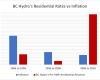
In the 20 years to 2006, BC Hydro’s charge per kilowatt-hour to residential consumers increased at 1/3 the rate of inflation. However, when Gordon Campbell’s neoliberal friends decided BC’s iconic utility was a ripe target for privatizing public wealth, things changed dramatically. In the 10 years to 2016, BC Hydro’s charge per kilowatt-hour to residential consumers increased at 5x the rate of inflation.
A message to BC Hydro: “Figure out what you are supposed to be doing, then do it. W.A.C. Bennett established this vital crown corporation to provide reliable, affordable power to British Columbians. That’s what it should be doing. Instead, it is forcing citizens to pay much higher prices to provide financial benefits to foreign owned companies and a band of me-first IPP slicksters and a group of political contributors gaining returns on their liberal investments by sitting in the boardroom of BC Hydro.

Large dams run 96 percent over budget on average, according to a University of Oxford study based on projects in 65 countries including Brazil and China. The study, published in the journal Energy Policy, showed that large dams also took about 2.3 years longer to complete than originally planned. That was about 44 percent longer than projected at the point of approval. The research was based on a study of 245 dams…

Despite deep cynicism about journalists backing BC Liberals, I had long held respect for the writing of Vaughn Palmer. My reservoir of appreciation has now run dry. He has been bright, skilled and articulate, usually worth reading throughout 35+ years with the Vancouver Sun. Now, I don’t know. Is he distracted, overburdened, grown careless or captured by his subjects?
Hunter S. Thompson: “As far as I’m concerned, it’s a damned shame that a field as potentially dynamic and vital as journalism should be overrun with dullards, bums, and hacks, hag-ridden with myopia, apathy, and complacence, and generally stuck in a bog of stagnant mediocrity.”

A bit out of date but this item first published in January 2015 is worth repeating. It shows something about the quality of political reporting in BC. January 2, an unidentified caller […]

You are a stakeholder in the Peace… It’s time to take a stand and plant your stake to support the cost of the First Nations’ legal battle to STOP SITE C + SAVE THE PEACE RIVER VALLEY. $100 DONATION (tax receipted) plants A YELLOW STAKE (with your name + city name) on the third-generation Boon Farm, which BC Hydro wants to acquire/expropriate… 100% of funds raised directly support Prophet River and West Moberly First Nations legal challenge to Protect the Peace River Valley.

Regular readers know that BC has a surplus of electricity, created mainly by BC Hydro’s steadily increasing purchases of private power, even though domestic consumption has been flat since 2005. Export markets are unprofitable and that situation has continued for years. Proof is offered by BC selling Columbia River electricity outside the province for about one-quarter of BC Hydro’s marginal cost of power. If BC Hydro doesn’t need costly Narrows Inlet power, why are 5 projects on 4 creeks proceeding?

Economists write papers on the circular flow of income but they don’t include the flow between politicians, businesses and the public treasury. In BC, it is commonplace. If you are an observer grown cynical – like the writer – you may wonder what secret benefits are to be found in the circular flow of income between Government, the governing party of British Columbia from 2001 to 2017 and the companies they purport to regulate.

The government’s reckless decision to proceed with the $8.8 billion Site C dam project, without a proven medium term domestic need for the additional power, will seriously weaken BC Hydro’s already poor financial outlook. Possible options to finance the dam must not preclude the fiscal capacity of BC Hydro to reform and restore its existing financial situation, within the context of future affordable rate increases…
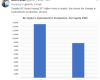
BC residents: we’ve been played for fools by BC Liberals, the private power industry and a complicit media. Between 1997 and 2015, the utility increased assets by $17 billion and added another $4 billion by December 2016. With markets flat but purchases from Independent Power Producers rising steadily, BC Hydro must reduce production of low-cost hydroelectricity in its own facilities.

Anne Cameron: Well, we’re less than 300 fulltime residents, we’re at the end of a goat track, we’re an hour and a half out of Gold River and, frankly, who gives a poop. We’re being fleeced by two corporations, and we’re being screwed by the government which allows out-of-sight out-of-mind pillage which they will insist on calling “resource extraction”.
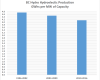
After four decades of successful operation, BC Hydro changed drastically under Campbell/Clark Governments. It’s become a patronage playpen, with the chief executive suite and the boardroom peopled with loyal Liberal friends. It’s been a comfortable ride for BC Liberals but a disaster for residents and small-medium businesses. Now the incompetents want to make it even worse by delivering billions more to companies of questionable integrity. Important Site C contractors have been implicated in corrupt and questionable practices.

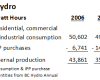
The structure of the Canadian Entitlement makes it an extremely valuable commodity in the utility industry. Electricity is more valuable when it is virtually guaranteed to be available, or “reliable,” and when its delivery can be shifted to times of high demand, or “flexible.” The Canadian Entitlement offers both of these attributes. British Columbia’s sale of 4,540 GWh of electricity brings in about $120 million a year, which is 2.64¢ per Kwh. We didn’t need that power because, with ever-increasing purchases from independent power producers (IPPs), the province had surplus electricity. In the last reported quarter, December 2016, BC Hydro paid an average of 9.14¢ a KWh to IPPs. Had BC replaced IPP power with the Canadian Entitlement, at 9.14¢/KWh, it would have saved $295 million in 2016.

BC Hydro’s own statistics prove the utility has no good business reasons to be building Site C. Domestic customers use the same volumes of electricity today as a dozen years ago and rapidly rising prices will ensure further conservation moderates consumer demand. BC Liberals argue the new dam should be built, not because it is needed, but because it is providing jobs. That, of course, fails to account for financial damage to commercial and industrial enterprises hit with rapidly rising electricity rates. The competitive advantage of low cost electricity once enjoyed by BC employers has been squandered.

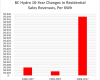
BC Hydro and their consultants have not moved up the learning curve despite being wrong year after year for more than 12 years and sadly the BCUC has let them ride on this way. The consequence of being deliberately wrong for 12/15 years is the condition we now have. Residential and small business rates up +70% with no increase in demand. We also have new contractual debts of plus $60 billion to IPPs…
Harry Swain, a former federal deputy minister, was Chair of the federal and provincial Site C Joint Review Panel. He has strong views about the project and about financial reports issued by BC Hydro. On June 8, Dr. Swain appeared on CFAX with Pamela McCall (audio is linked below). In most jurisdiction, the allegation of “accounting chicanery” at a multi-billion dollar crown corporation, made by a highly respected professional, would draw attention of corporate media’s political pundits. However, this is British Columbia and BC Liberals and business friends have put great effort into buying media silence.


Thanks for this article Norm. The BC Greens are breaking new ground this election by promising to introduce a wealth…
Let's ask an expert.. Consider The House of EL’s analysis of “thought” as it functions among the AI and business…
If anything could keep sleep-deprived President Trump busy threatening new tariffs it is likely to be Europe’s decision to remove…

Hi Norm, I think you might find this book review, from the New York Review of Books, interesting. I think…


How to cope with an America that can't seem to cope with what it has become. El's analysis... https://www.youtube.com/watch?v=1VFRMxhEEbU