
During their tenure, BC Liberals declared increases in private power purchases and aggressive expansion of BC Hydro assets were needed to meet growing demands by consumers. After 2005, electricity sales mocked that claim. So, the politicians asserted a need to serve North America by supplying clean energy. Others were better equipped to apply new technologies and they didn’t believe BC’s river damaging energy was particularly green. The goal changed again, to powering a trillion dollar LNG industry that would add $9 billion a year to the public treasury. When that was revealed as fantasy, Liberals suggested BC could provide clean energy to enable Albertans to harvest dirty energy from bituminous sands. Recently, Christy Clark said the Site C dam was needed to flood the Peace River valley as a measure to prevent flooding of the Peace River valley. The Premier needed a new justification for building the dam after it became clear that plans to sell to Alberta were as realistic as paying off provincial debt with natural gas revenue.
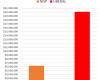
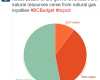
BC natural gas $400m loser in 2016
According to Statistics Canada, natural gas producers employ 1/4 of 1% of BC workers. Yet, they receives extraordinary financial assistance from government. That may result because the BC Liberal party receives extraordinary financial assistance from natural gas producers.
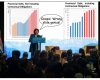
"Some cultures would call us elders, think we’re cool and listen to us"
In a comment at an earlier article, Alison Creekside – a fine blogger you should read regularly – linked to this 2009 video of MLA Corky Evans. He talked about BC Liberals turning loose a private power gold rush but it was one that sluiced only half a billion a year. This year it will be closer to one and a half billion and the contracts BC Hydro has already signed total almost $60 billion. The number continues growing.
With CKNW’s Jon McComb, Aug 2
Listen to the audio from my August 2 conversation with CKNW morning man Jon McComb.
Damien Gillis wrote…
The mainstream media, as is to be expected, is largely parroting the government’s cover story and ignoring the real problem: BC Hydro and its ratepayers are in a world of hurt because of 12 years of very deliberate and disastrous BC Liberal Government policies, pushed on the public utility.
Motivated by greed, not by need
“Conservation is the cleanest, easiest and least expensive way to meet the increasing demand for electricity in B.C. – it’s like building a virtual dam.” – Bob Elton, BC Hydro President and […]
BC Hydro – destruction in progress
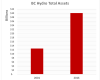
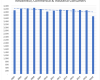
In 2001, for each dollar of assets, BC Hydro had 63¢ in electricity sales. In 2016, the number fell to 17¢. BC Hydro sold more electricity to residential, commercial and industrial customers in 2005 than the utility did in 2016. BC Hydro did that with assets worth 40% of today’s value. Shockingly, the company is embarked on a program of capital expenditure that will add about $15 billion to its list of assets. By any measure, the management of BC Hydro has been a colossal failure, incompetence made worse by chicanery and flawed policy objectives.
Disgracing M.O.M. again
BC Supreme Court Justice Catherine Bruce today freed John Nuttall and Amanda Korody, after saying the pair were entrapped by RCMP trickery and subterfuge. Justice Bruce wrote: Simply put, the world has enough […]
BC Liberals delivered $9 billion to IPPs
In the last five years, the delivery of cash to IPPs totaled $4.6 billion. If the established trend continues, the amount will be $8.3 billion in the next five years. Amounts flowing to IPPs and the necessary write-off of more than $6 billion in deferred costs means in the next five years, consumers will pay rates 60% higher than they’ve paid in the last five years. In addition, more than $10 billion dollars is committed to Site C and BC Hydro has been spending over $2 billion a year on capital expenditures. Without profitable new markets – none are anticipated – the 60% price rise for electricity could be 100% in the foreseeable future.
Blog Talk Radio with Canadian Glen
This audio file is my extended conversation with Canadian Glen on July 27. You can hear his earlier session with Merv Adey on BC politics HERE. Friday morning I’ll be talking with John Moxon […]
Critics of private power projects not silent
Devastation of many private power installations in BC wilderness involves:
blasting and tunnelling, clearcuts for the penstocks, clearcuts for the power lines to join clusters of powerhouses together, service roads larger than for logging, clusters of permanent powerhouses, diversion of waterfalls, drying of rivers…
Duped by fossil fuel barons
The following excerpts are from a piece in DeSmog Blog. It is written by Martyn Brown, an articulate commentator on public affairs and, years ago, Premier Gordon Campbell’s Chief of Staff. The linked piece is the fourth of four parts about B.C.’s climate action plan. The entire series is worth the time of anyone seeking a more complete understanding of the intended and unintended directions of BC’s current energy policies. It is excellent work.
How did we get into this IPP mess?
Politicians assumed that power demand would grow and prices rise so they readily agreed to BC Hydro purchase contracts that were decades long with annual price escalation tied to inflation. They carelessly assumed the arrangements would be beneficial to all. However, what private industry achieved was guaranteed sales with guaranteed profits. All of the financial risks were carried by the public.
BC Hydro gifts worth billions
Had IPP’s sold their power for the same price that BC Hydro realized in trade markets, they would have realized:
In FY 2015, $591 million less;
In FY 2016, $782 million less.
The deals will get better for IPPs. BC Hydro’s website now announces that it has contracted for 19,290 GWh from these private producers. That is 35% more than purchases in the just completed fiscal year and follows an established trend.
Christy Clark inspired by Pat Paulsen?
“Will I obliterate the national debt? [long pause] Sure, why not?” Remember Christy Clark’s promises of a debt-free BC enabled through wealth created by natural gas production? Reality is much different, revealed in Finance Ministry documents that provide this information.
Port Mann losses “unsustainable”
Since toll revenue at Port Mann has covered only 39% of operating costs, the BC Government needs to explain how it will finance existing and future shortfalls on Port Mann/Highway 1. These are growing by about $5 million a month and paying for an even more costly tunnel replacement will demand a solution. One possibility was proposed in the original Gateway Program. It contemplated: “…tolling of all bridges connecting to the Burrard Peninsula, including the Lions Gate, Ironworkers Memorial, Pitt River, Port Mann, Pattullo, Alex Fraser, Knight Street, Oak Street and Arthur Laing bridges…”
Time to end complicity with swindlers
If members of the BC Legislature value ethical standards in business, they must revoke the LNG Project Agreements Act, the enabling act passed for Malaysian National Oil Company Inc.(PETRONAS). That company’s senior management answers directly to Malaysian Prime Minister Najib Razak, who is implicated by the FBI in misappropriations of more than $3 billion.
News or not news?
Natural gas production levels have increased (53% since 2007) yet net revenue to government from gas in the past year was negative. Instead of being paid for the right to extract this public resource, British Columbians are paying for its removal.
If facts awkward, invent new ones
Spin doctors understand that statements should be given with certainty in places where they won’t be tested for accuracy. The corporate press is one of those places. In words of Jonathan Swift: “Falsehood flies, and truth comes limping after it, so that when men come to be undeceived, it is too late; the jest is over, and the tale hath had its effect.” However, I’m always willing to test the words of a person who intends to mislead.
LNG boom gone bust
Christy Clark and her crew spent more than a billion dollars through the Ministry of Natural Gas Development, gave away billions more in gas industry subsidies and promised low or no taxes, taxpayer-paid infrastructure and subsidized electricity; all in the hope of creating an LNG industry that had a competitive disadvantage from the start. Critics like the one you’re reading knew LNG wealth promises were hollow but this Government decided to continue wasting vast sums to avoid admitting failures from incompetence and poor judgement. They will claim bad luck and unforeseeable circumstances; knowledgeable people will know differently.


Thanks, Norm, for continuing to pound the drum about the giveaways in the oil and gas extraction industry. Aside from…