


BC Liberal government insisted they not be allowed to entertain other more environmentally sound and less expensive systems. Seems Ms. Clark has a list of eligible corporate sponsors for contract dispersals…

BC Liberal government insisted they not be allowed to entertain other more environmentally sound and less expensive systems. Seems Ms. Clark has a list of eligible corporate sponsors for contract dispersals…
At my Tyee article BC Hydro: From Public Interest to Private Profits, a couple of commenters associated with BC Hydro and the Liberal Party dispute statistics. However, the numbers I use are from BC […]
An almost quote from James Boren, “Every Liberal has a right to fuzzify, profundify and drivelate. It’s a part of our freedom of speech…If people can understand what is being said in Victoria, they might want to take over their own government again.”

A reporter’s job is to get as close to the truth as possible, overriding personal biases and sifting through a rising churn of spin and lies to explain what happened and why it matters. At its highest levels, journalism informs (via scoops and insights that would otherwise be unknown), provokes (via new thoughts and action), and holds powerful people accountable (with no fear or favor).

Normzig, “No matter how many speeches are made or how many permits are issued and how many rainbow forecasts are shown, the only way BC is getting LNG plants anytime soon is […]

Perhaps a TV news anchor revealed more than he desired Friday. On Twitter, Chris Gailus explained why Global TV would not cover what might be one of Vancouver’s most significant news stories this decade: …it’s not a […]
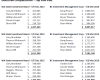
In its last fiscal year, BC Investment Management Corporation (bcIMC) paid its top five executives $7.25 million. In its last fiscal year, Washington State Investment Board (WSIB) paid its top five executives $1.76 million. In Victoria, CEO Gordon Fyfe is paid almost five times the amount paid Gary Bruebaker, WSIB’s Chief Investment Officer…

Leaders cannot keep marching in the same direction simply because they have invested heavily in a particular course of action. Instead, leaders must react to changing conditions and be willing to shift direction accordingly, perhaps even to pivot one hundred eighty degrees if the situation warrants it. This is not a complex direction but it doesn’t resonate with the small minds running government in Victoria. Regarding BC Hydro, they’ve become overly committed to announced policies despite consistently poor results and clear evidence of failure.

Conflict of Interest Commissioner has been unable to answer questions posed by journalist Bob Mackin. Of course, Fraser has only a handful of staff members to assist him so communicating with inquiring reporters is nigh impossible. When one man has only a single Executive Co-ordinator, one Executive Administrative Assistant, one Legal Officer and a single research assistant and faces one, two, even three formal opinions to be issued each year, some time saving moves are required.

BC Liberals claim NDP doesn’t want to talk about their record at BC Hydro. In fact, it is the Liberals who don’t want to talk about the NDP record.

G20 country governments are providing $444 billion a year in subsidies for the production of fossil fuels. In Canada, at the federal level, this amounts to a minimum of $1.6 billion, mainly through tax expenditures. At the provincial level, tax breaks amount to a minimum of $979 million annually. In fact, the numbers are even larger. Fossil fuel companies recognize values gained when sympathetic politicians are there to determine financial policies so oil and gas producers spend extravagantly to sustain a synergetic relationship. In recent years, they’ve courted journalists and media companies whose financial comforts have been in decline. Many of those have turned out to be of easy virtue.

They don’t want well-informed, well-educated people capable of critical thinking. They’re not interested in that. That doesn’t help them; that’s against their interests. …You know what they want? They want obedient workers… people who are just smart enough to run their machines and do the paperwork and just dumb enough to passively accept all these increasingly shittier jobs with the lower pay, the longer hours, the reduced benefits, the end of overtime and the vanishing pension that disappears the minute you go to collect it.

Were David Black and Christy Clark serious about the Kitimat refinery? During the mid-1960s, American entrepreneur John Shaheen, owner of Shaheen Natural Resources Company and various other petrochemical businesses, arranged to construct an oil refinery at Come By Chance, then an east coast hamlet. The plan was ill-fated and resulted in one of the single largest bankruptcies in Canadian history to that date. It also greatly added to NL’s mounting public debt.

The Crown Petroleum and Natural Gas Rights Public Tender brought in $950,121 this week, raising the 2016 eight month total to $5.8 million. 2015 and 2016 are the two worst years among the last 20. It’s another bad result for a Premier who ran the last election on a claim that large natural gas revenues would result in a debt-free, sales tax free BC.
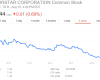
Journalism should be at the root of the journalism business. Instead, daily publishers cut the news staff in half and charge twice as much for inferior content. Consumers responded by walking away. Rather than improving the output and persuading news consumers to pay for content, media moguls aim to have the Trudeau Government bail out their news businesses. It will happen too because Liberals have always been willing to spend public money if private advantage was there to be gained.

When a small but politically influential group advocates change to reduce their taxation by $2+ billion a year, they want the rest of us paying instead. With the potential reward so large, the province’s business leaders will remain persistent in demanding relief from sales taxes. Because they’ve invested millions of dollars in the BC Liberal Party, they expect success. Business benefits directly from infrastructure and services financed by taxpayers. They expect safe and orderly communities; they expect police and fire protection; they want educated workers, communication and transportation systems; and they want utilities to serve their offices, factories and warehouses. They want those things; they just want others to pay for them.

BC Hydro has been managed to deliver billions of dollars in benefits to independent power producers. Had IPPs been left to sell their product to the same free market that BC Hydro trades into, they would have gained 4.9 billion fewer revenue dollars since 2003.
During their tenure, BC Liberals declared increases in private power purchases and aggressive expansion of BC Hydro assets were needed to meet growing demands by consumers. After 2005, electricity sales mocked that claim. So, the politicians asserted a need to serve North America by supplying clean energy. Others were better equipped to apply new technologies and they didn’t believe BC’s river damaging energy was particularly green. The goal changed again, to powering a trillion dollar LNG industry that would add $9 billion a year to the public treasury. When that was revealed as fantasy, Liberals suggested BC could provide clean energy to enable Albertans to harvest dirty energy from bituminous sands. Recently, Christy Clark said the Site C dam was needed to flood the Peace River valley as a measure to prevent flooding of the Peace River valley. The Premier needed a new justification for building the dam after it became clear that plans to sell to Alberta were as realistic as paying off provincial debt with natural gas revenue.
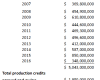
According to Statistics Canada, natural gas producers employ 1/4 of 1% of BC workers. Yet, they receives extraordinary financial assistance from government. That may result because the BC Liberal party receives extraordinary financial assistance from natural gas producers.
In a comment at an earlier article, Alison Creekside – a fine blogger you should read regularly – linked to this 2009 video of MLA Corky Evans. He talked about BC Liberals turning loose a private power gold rush but it was one that sluiced only half a billion a year. This year it will be closer to one and a half billion and the contracts BC Hydro has already signed total almost $60 billion. The number continues growing.


Uh Oh. Bill Gates goes public with his AI doubts (and Fears)? https://www.theguardian.com/us-news/2026/sep/27/bill-gates-artificial-intelligence-kristen-welker Bill Gates says unchecked AI could ‘cause…
Have Palm Beach residents been converted to Communism? https://crooksandliars.com/2026/09/palm-beach-county-home-mar-lago-passes Palm Beach County, Home To Mar-a-Lago, Passes Data Center Moratorium President…
Mr. King... That NPR interview is here. https://www.npr.org/2026/09/24/nx-s1-5903129/tucker-carlson-trump-iran-war-interview More recent news might send Tucker Carlson to seek consolation in exceptionally…

Carlin was special in the he made us laugh at things that aren't funny. Lots of Cassandras out there, going…


Thanks Skylab: Not that I’d ever have envisioned a time when I’d be ‘recommending’ anybody pay more than a New…