Richard McCandless, a retired high-level civil servant, is not a partisan for any political group but, for some years, he has been lobbying for more effective governance of British Columbia. In one […]
Site C, which was approved without a proper review by the B.C. Utilities Commission, is going to cost $8.8 billion we don’t have to produce electricity we can’t use, to power LNG plants that won’t exist, at a cost too expensive to sell to foreign markets…
On April 8, Vancouver Sun published an opinion piece by BC Hydro Chair Brad Bennett titled B.C. Hydro, vision, planning and fortitude — getting the job done. The Vancouver Sun does not identify Bennett as a partisan campaigner in BC’s current general election. In the article, Bennett applauds Liberal power policies and repeats an outrageous lie that has been part of BC Hydro’s misinformation strategy for more than 12 years.
I have tracked electricity sales for decades and written much about the subject at In-Sights. My charts report BC Hydro’s sales to these customers: Residential Light industrial and commercial Large industrial. Those represent […]
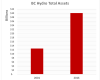
Despite the flat demand for power, BC Hydro is not only buying more private power, its capital spending program is out of control. As a result, despite a reduction in sales to BC customers since 2005, the utility’s assets in 2016 are 256% of the total eleven years ago. With Site C and other major capital projects, we can expect assets to grow by another 15-20 billion dollars in the near future. BC Hydro’s politicized management, under directions from Victoria, are hiding bad news with accounting trickery and, while they’ve increased the average price to residential and business consumers by 74% since 2005, the rates must rise significantly or the province must reverse the flow of cash from the public treasury to the accounts of BC Hydro.

More power supply and less demand should drive down costs. Instead, California’s electricity rates have surged 12% since 2008. BC Hydro average sale price rose 63% in the same period.
Liberals have been rotating a sharp-pointed metal pin with a raised helical thread within BC Hydro and ICBC but they began with BC Rail and BC Ferries. Lately, I’ve written mostly about BC Hydro but […]
Demand for electricity is in decline. Technology has changed. Dams are not benign and other sources of power are less expensive. Meaningful conservation is cheaper still.
A brisk building boom of hydropower mega-dams is underway from China to Brazil. Whether benefits of new dams will outweigh costs remains unresolved despite contentious debates. …We find overwhelming evidence that budgets are systematically biased below actual costs of large hydropower dams — excluding inflation, substantial debt servicing, environmental, and social costs. …The outside view suggests that in most countries large hydropower dams will be too costly in absolute terms and take too long to build to deliver a positive risk-adjusted return
$101 billion in contractual obligations is breathtaking? What is really surprising is that Toronto Globe and Mail’s BC political reporter didn’t notice before February of 2017. On one hand, I applaud Ms. Hunter for daring to mention the subject now. On the other hand, I wonder why she previously avoided this huge issue and did not report it fully in her newspaper?
Dr. Harry Swain explains in detail how BC Hydro can show a profit while losing money. He then describes the “oversight” process involving Site C.
In the real world, if a company grew its assets by $18 billion (138%) but reduced its production by 8%, heads would roll. In Premier Clark’s La La Land, party favours roll instead. Good Liberal CEO Jessica McDonald is secure in her job, at least until until May 9.
BC Hydro will lose hundreds of million of dollars per year on Site C dam output, according to a Vancouver Sun article by economist Marvin Shaffer. Facing an installation cost double that of power from utility-scale solar or gas fired turbines, additional hydro-electricity is unneeded and unaffordable. However, in the face of an election, the board of BC Hydro, loaded with Liberal patronage appointees, is not about to correct its faulty course.
A guest post from Roger Bryenton P.Eng. (former), MBA, Energy Systems Consultant, Suzuki and SPEC elder.
BC residents have not been told the full truths about Site C and BC Hydro’s markets for electricity.
BC Hydro’s management are using deferral accounts and accounting trickery to conceal the company’s financial conditions and prospects and they are telling outright mistruths about demand for electricity by consumers in British Columbia.
Are there secret reasons why Liberals committed billions of dollars for Site C to produce power that BC consumers won’t need, even in the distant future? Have we had hints of why there is a rush toward what Premier Clark called the point of no return and what others called a route to nowhere? Do those reasons have anything to do with the rewarding habits of prime Site C contractors?
Looming disasters in BC, ON and LN have one thing in common. They are the work of Liberal government controlled and politically manipulated Crown corporations.
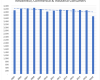
The set of facts that troubles BC Hydro executives most is the one that best reveals their deceptions. The consumption of electricity in this province has remained stable for a dozen years. In fact, the first half of the current fiscal year shows consumption is down by 2.1%, compared to the preceding year. Under its current Liberal direction, BC Hydro’s leadership forgets the company’s original purpose. Now, the aim is to deliver benefits to a tiny group of individuals and corporations and to have ordinary citizens pay the cost, whether it is affordable or not.
Increasing IPP purchases and flat demand for power obviously means that BC Hydro creates less power to meet demand by its users in BC. However, massive spending means the utility employs more than triple the assets to produce one gigawatt hour of electricity than it did a dozen years ago. This is bad policy not explained by mere incompetence of management. We must conclude that the Liberal Government is directing the public utility, either to cripple it or to deliver billions of dollars to friends and supporters.
Opponents of Liberal power policy assume that, beyond grabbing the profits to be made flipping IPP contracts, Liberal operatives aimed to cripple BC Hydro to make its privatization palatable. The guiding parties decided they could gain more another way. There was no need to privatize Hydro’s assets and liabilities. Instead, they privatized its profits and left Hydro and the public with all the financial risks…
[…] A century ago, an American advertising executive popularized the phrase, “A picture is worth a thousand words.” Toronto Star…