

Kootenay Bill’s Casablanca moment

Found in the casino where he regularly pockets winnings, Captain Renault says, “I’m shocked, shocked to find that gambling is going on in here!” Kootenay Bill may not have been aware of more than a billion dollars of unfunded liabilities for mine clean-up but you can bet the BC Liberal bagmen were very much aware.

Province at risk

The hazards of transporting LNG through narrow waterways are generally ignored yet the danger is real, particularly in populated areas, such as the lower Fraser River and Howe Sound. One reason that foreign companies may be attracted to British Columbia is its lax regulatory environment.

Ruining the just man’s cause

New York State officials aimed to limit the extraordinary electoral influence of extraordinary wealth. People who wanted their financial powers unrestricted began legal action and, applying higher court rulings, United States District Judge Paul A. Crotty tossed the limits. He did so with obvious regret, complaining he was forced to apply a definition for corruption “no matter how misguided . . . [the Court] may think it to be.”

The Judge’s five-page opinion is worth considering, particularly now as the British Columbia government repudiates citizens calling for rules against corporate and union political donations. Insights West calculate that 86% support a ban. In today’s neverending cycle of campaigning and lobbying; lobbying and campaigning, elected officials know where their money is coming from and that it must keep coming if they are to stay in office.

…influence bought by money is no different than a bribe, and as the Book of Exodus 23:8 counsels, “a bribe blinds the clearsighted and is the ruin of the just man’s cause.”

Half-prepared for battles of wits

Another publication, Natural Gas Intelligence (NGI), provides detail of the marketplace for LNG. It is now an international exchange much different than the one that first excited the ex-policeman and small town lawyer who thought, with equally ill-equipped assistants, they could negotiate for British Columbia at boardroom tables of giant multinational energy corporations.

Back scratching

An old expression says, “You scratch my back and I’ll scratch yours.” The maxim doesn’t require rewards for scratching be equal and, often, they are not.

According to Elections BC, AltaGas Ltd. and associates contributed a little more than $70,000 to the BC Liberals. It’s been money well spent… At $110,000 per GWh, AltaGas’ revenue from BC Hydro would be worth $143 million in 2016…

Vancouver Sun and snake oil rhetoric

Overall, says Dermod Travis of Integrity B.C., the Gateway transportation plan — other components include the Port Mann Bridge replacement, widening of the Trans-Canada Highway, and the North Fraser Perimeter Road — overshot budget estimates by more than $2 billion. Travis warns that of 18 projects announced by the B.C. government since 2003, nine hospitals are over-budget by 12.6 per cent, seven transportation projects are 59.2 per cent over budget, and the Vancouver Convention Centre Expansion Project and a new roof for B.C. Place were 68.1 per cent over budget. Then there are the provincial government’s large-scale information technology projects. Reporters Lori Culbert and Rob Shaw found them plagued by operational problems, behind schedule, and $350 million over budget… Finally, there is the abysmal B.C. Hydro file…

Walk more lightly on the earth

…The changeability of the future suggests to us that megaprojects are becoming less of a credible answer. They are a huge capital drain and carry a great deal of financial risk.
…We also know, better than ever before, that no means of generating electricity is environmentally benign. Hydroelectric dams can flood large areas of land and can impact aboriginal people and their lifestyles. Fossil-fuelled generation creates sulphur dioxide, nitric oxide, carbon dioxide and greenhouse gases that impact global warming and deplete the ozone layer…
One even more significant source of “supply,” in one sense of the word, is demand management or energy conservation — and it has dramatically fewer or nil environmental effects.
…demand management is much more than a good deal for the environment. It’s also a great business deal for Hydro’s customers. Furthermore, this is not a bridge or a “quick fix” until the next supply stations can be built…

Liberal hypocrisy

…In broader terms, Holm emphasized, “The land to be flooded by Site C is capable of producing high-yielding fresh fruits and vegetables for over a million people.”

…Much like the Liberal Government did to the BC Utilities Commission – barring the public’s independent energy watchdog from reviewing the economics and need for Site C – it has also stripped the Agricultural Land Commission (ALC) of its lawful oversight of the biggest potential land removal in its history.

…Beneath the 15,000-page reports, the political shenanigans with the review process, and all the rhetoric about economic development lies a simple truth: Last year, BC generated about 110% as much electricity as it needed, but produced, at most, 48% of the food it consumed. In other words, while we have plenty of electricity to power our homes and businesses well into the future, the same thing cannot be said about our food security…

IPPs received $672 million above market price in 2015

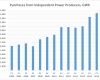
I’ve been reviewing more than 20 years of BC Hydro records and they show gradual growth in electrical demand until 2005. Subsequently, there has been no demand growth; in 2015, domestic power sales were lower than ten years before. What did grow were Hydro’s purchases of electricity from independent power producers. In calendar year 2006, 5,636 GWh supplied by IPPs cost $368 million (6.5¢/KWh); in 2015, 14,418 GWh cost Hydro $1,217 million (8.4¢/KWh).
A 155% increase in the volume of IPP purchases is alarming by itself given the lack of need for it but the average unit price has been rising steadily. In the 4th quarter of 2015, IPP unit prices were 9.2% higher than the preceding quarter. To accommodate power coming into the system, BC Hydro had to choose between shutting down their own capacity or dumping power in markets outside BC at well below cost…

Reward without risk for worthless surplus power

British Columbia’s government believes less in free enterprise than in assisted activities for approved associates. Entrepreneurs saw potential for a private power generation industry in the province but didn’t want to risk their own money. Instead, they arranged with the Liberal government for the public to accept all risks and guarantee substantial profits to the schemers…