


Race is not a biological reality. Racism thrives on our not knowing this.
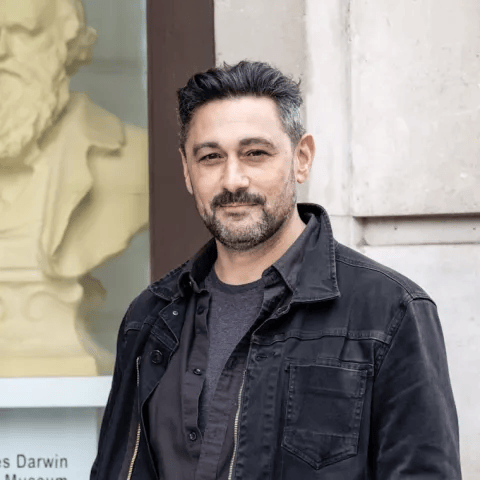
Adam Rutherford is a geneticist, science writer, and broadcaster. He studied genetics at University College London. As well as writing for the science pages of The Guardian, he has written and presented many award-winning series and programs for the BBC. He is the author of:
Racist pseudoscience has become so commonplace that it can be hard to spot. But its toxic effects on society are plain to see—feeding nationalism, fueling hatred, endangering lives, and corroding our discourse on everything from sports to intelligence. Even well-intentioned people repeat stereotypes based on “science,” because cutting-edge genetics are hard to grasp—and all too easy to distort. Paradoxically, these misconceptions are multiplying even as scientists make unprecedented discoveries in human genetics—findings that, when accurately understood, are powerful evidence against racism. We’ve never had clearer answers about who we are and where we come from, but this knowledge is sorely needed in our casual conversation about race.
How to Argue with a Racist emphatically dismantles outmoded notions of race by illuminating what modern genetics actually can and can’t tell us about human difference. We now know that the racial categories still dividing us do not align with observable genetic differences. In fact, our differences are so minute that most of all, they serve as evidence of our shared humanity.
The above introduced me to Rutherford’s book, How to Argue With a Racist. I have little appetite for arguing with racists. I’d rather keep them out of my life. However, Rutherford’s book includes truths that would distress those people:
Every Nazi had Jewish ancestors. Every white supremacist has Middle Eastern ancestors. Every racist has African, Indian, Chinese, American Indian, and Aboriginal Australian ancestors, as does everyone else … Racial purity is a pure fantasy. For humans, there are no purebloods, only mongrels enriched by the blood of multitudes…
I’m a baby boomer who grew up where racism could be blunt or casual, and both were commonplace. Some of it came out of my own mouth. Like other children around me, I chanted rhymes whose words I barely thought about. Here are the openings of a few I remember.
- Eeny, meeny, miny, moe / Catch a ni**er by the toe / If he hollers, let him go / Eeny, meeny, miny, moe…
- Five little darkies jumping on the bed…
- Chinky, chinky, Chinaman, sitting on a fence / Trying to make a dollar out of fifteen cents…
In the early 1980s, you could buy Licorice Kids alongside bubble gum and jawbreakers. Before then, the little black licorice figures had gone by names like “tar babies” and “ni**er babies.” A racial slur was part of the vocabulary of the penny-candy counter.
In the 1960s, I worked alongside a Sikh man who wore a turban. One of the foremen called him “raghead” or “that Hindu.” Someone pointed out that our co-worker was Sikh. The foreman replied, “I don’t care. They’re all the same to me.”
I entered Grade 12 in 1963, the year the first few students from the Tla’amin Nation attended Powell River’s senior secondary school. Until then, we had paid little attention to the Indigenous people who lived nearby. We noticed that their community lacked some of the amenities we took for granted, but gave little thought to why.

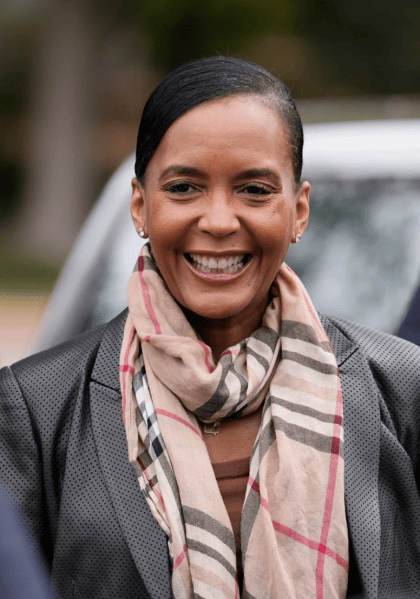
Adam Rutherford reminds us of progress made in recognizing human equality. I thought of that as the results of the 2026 U.S. midterms came in. Alongside the Democratic gains came a series of firsts. Georgia elected its first Black woman governor. A Black man leads the race to be U.S. Senator from Mississippi.
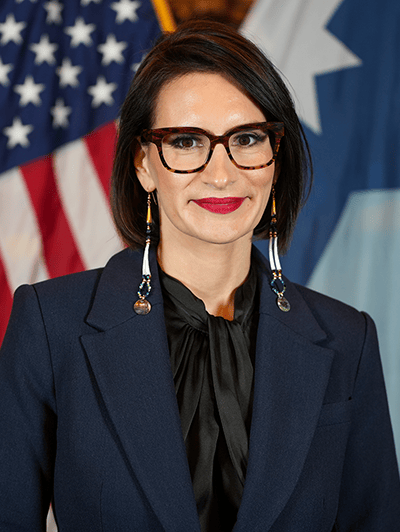
Minnesota elected Peggy Flanagan, the first Native American woman elected to the U.S. Senate, and Michigan elected Abdul El-Sayed, who will become the country’s first Muslim senator.
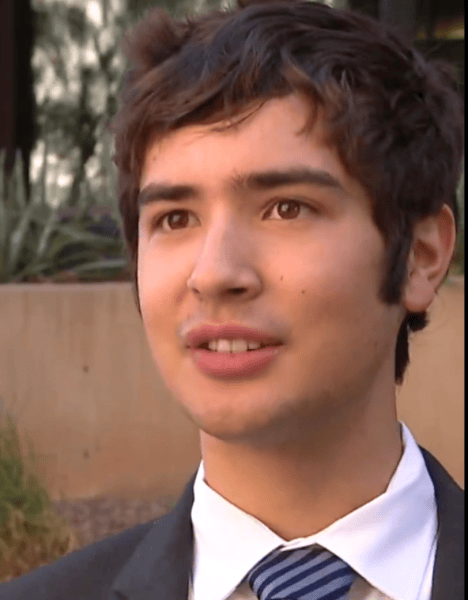
Age mattered, too. An early estimate put youth turnout among the highest for a U.S. midterm in three decades. In Arizona’s Maricopa County—fourth-most populous county in the United States—voters elected Sebastian Matta, a 19-year-old college student, as clerk of the Superior Court. He’ll oversee the important office responsible for keeping the county’s court records.
Deep inequalities remain. Still, these results suggest that many voters are willing to put their trust in people who would scarcely have been considered for such offices when I was young.
I hope that before long, victories like these will be ordinary enough that we’ll stop counting them as firsts.
Categories: Human Rights


Progress?
If Alberta’s geothermal energy company EAVOR continues to expand northward the reign of diesel in the Arctic will end. More to the point where is there any other plausible choice at scale?
Goodbye Ice Roads, hello to the thermosiphon.
Details?
BC’s LNG Energy Superpower agenda?
For BC’s domestic market what sense does it make to rely on one toxic fossil fuel dependency for yet another? Worse, the risks of relying on foreign owned companies became clear recently. Where does BC go when a vendor decides to squeeze more profits by choking off supply (accidentally of course!). Security guarantees beforehand didn’t help protect Ukraine, did they?
Other countries want to purchase BC LNG? Fine. But if Ukraine wasn’t lesson enough and sufficient incentive to protect BC consumers from more price shocks what will it take?
LikeLike
To help the mining industry survive in the Arctic Canada will drill for geothermal energy.
However, assume that elsewhere the heat required is at a depth where drill bits fail. How can that heat ever be reached?
Japan’s alternative is funded by a Japanese oil giant utilizing fusion engineering.
Their strategy is now being developed for permanent control of future energy needs. In a word they own the energy beneath their feet. Until recently this option remained too expensive.
More on geothermal? It’s here at In-sights.
https://in-sights.ca/category/geothermal/
\https://in-sights.ca/2025/12/05/eavor-is-producing-clean-electricity/
LikeLike
Is China’s dramatic shift to green energy another Sputnick Moment?
Until October 4, 1957 most Americans were content with the High Ground above them. A day later able to see a Russian satellite pass overhead the idea that there might be a “missile gap” stimulated a race to surpass a potential enemy in space tech.
John Kerry now offers an economic warning about the high cost to the US of being left behind.
https://www.theguardian.com/environment/2026/nov/10/china-green-energy-john-kerry-cop31
China is leading the world in moving away from fossil fuels, and the rest of the globe – including the US – must now follow, the former US secretary of state John Kerry has told the Guardian, as Cop watchers wonder exactly how China is going to approach this year’s climate summit.
Green energy is a vital component of the export engine that has kept China’s sluggish post-pandemic economy on track. The success of its exports stands in contrast to its failure to significantly boost domestic general consumption, a structural weakness that has persistently vexed leaders.
In 2025, clean-tech exports surpassed $220bn, and they should grow again this year; the world’s largest emitter is now the world’s leading supplier of clean energy technology. China accounts for about 85% of solar and 80% of lithium-ion battery supply chain production capacity, and in 2025, nearly 75% of electric cars were manufactured there.
Smart moves now by China would position it as a linchpin in a future electrostate world order, persuade rivals to cooperate, and solidify its influence in the global south.
Meanwhile other countries, including the US under Donald Trump, have fallen badly behind. Kerry said they would lose out economically – as well as putting the climate in further danger – unless they, too, embraced low-carbon power and rapid electrification. “The only country that has hugely accelerated is China. The rest of the world is stumbling along while Mother Nature is sending us more powerful signals every week, every day,” he said.
“[China] realised suddenly they had way too much dependency on oil and gas from other places, and they decided they needed to be independent. Other countries, since the war in Iran, and since the strait of Hormuz has been interrupted, have made a similar decision, and they’re moving independently. There’s been a massive uptick in deployment of renewables. Thank you, Donald Trump.”
For autocratic states without free and fair elections, seeing the economic benefits reaped by China would be the spur to adopt low-carbon growth, he added.
“They’ll see where the market is going, and they will recognise where the cheaper alternatives are. Even they can read a spreadsheet, and understand where costs are exorbitant [in fossil fuels], and where you have a better deal,” Kerry said. “Right now, renewables together with storage, together with some transitional gas, is cheaper and more effective, than just going with fossil fuels.”
LikeLike
Uh-Oh. Another Chinese EV innovation?
The problem: your large EV transport is almost out of power. What can you do?
Ans: Swap out the battery. It takes 5 minutes.
https://www.theguardian.com/environment/2026/nov/12/china-battery-swapping-e-trucks-catl-ev-range-anxiety
Every day, Wang Bing drives his big electric lorry to send about five tonnes of goods between the cities of Haikou and Dongfang on Hainan, a tropical island in southern China. A round trip covers about 500 kilometres (310 miles). But refuelling is not something Wang worries about.
“When my battery runs low, I just drive my truck into a battery-swapping station to get a fully charged one,” says the 53-year-old, who shares the journey with a colleague in eight-hour shifts.
Wang has been a lorry driver for nearly three decades. In the first two of those, he drove conventional lorries fuelled by diesel. About five years ago, he began driving an electric model after the logistics company he worked for upgraded its fleet. In July this year, his old e-truck, which used conventional plug-in charging, was replaced by one with a swappable battery.
In the past, Wang had to spend an hour and half charging his battery each time, but with his new truck, it takes just five minutes or so to have a drained battery removed and a fresh one replaced. “I am very happy,” he says.
Battery swapping is not new in China, where more than 400,000 e-trucks (or over 90% of the global total) were sold last year. The Chinese carmaker Nio commercialised the technology nearly a decade ago for smaller electric vehicles (EVs). But in 2023, the Chinese battery behemoth CATL launched a battery-swapping system for electric lorries through a subsidiary brand called Qiji Energy.
To Wang, the biggest advantage of the technology is the time it saves. “It is much, much faster,” he says. “I don’t even need to leave my truck when the battery is being swapped.”
This swiftness builds on the cost advantage e-trucks already have over their fossil-fuelled peers when it comes to refuelling.
“Electricity is cheaper than oil,” Wang says. The per-kilometre fuelling cost for an e-truck works out about 1.1 yuan (12p) in Hainan, he says, significantly lower than that for a diesel truck, which exceeds 2 yuan (22p) a kilometre. “That means my e-truck can save more than 20,000 yuan (£2,200) per month,” Wang says.
When a truck approaches a battery-swapping station, the station’s cameras automatically identify the type of battery it uses by checking its number plate. “All the driver needs to do is to drive the truck into a designated area, and the battery will be swapped completely automatically,” says Wei Jiuchun, 46, a test driver at a Qiji Energy battery-swapping station in Suzhou, east China. Wei’s job is to help the station test its system for different models of heavy trucks and under different weather conditions.
LikeLike