
Canada a world leader? Sometimes that headline is good news. This time it is not…

Canada a world leader? Sometimes that headline is good news. This time it is not…

Since 1990, Canada’s emissions have decreased by a modest 3.1 tonnes per person. However, when we look at the distribution of emissions, we find that the bottom 90% reduced their emissions by almost 5 tonnes per person, while the top 1% increased their emissions by 34 tonnes per person.

A few in the BC Legislature, and the Official Opposition in Canada’s Parliament, want us to believe that carbon taxes must end to improve the country. They’re wrong, MP Alistair MacGregor has it right about carbon taxes making a major contribution to inflation, although the NDP MP misses an even more important point…

In September, California issued a lawsuit charging numerous oil companies and the American Petroleum Institute for intentionally spreading misinformation and delaying action on climate. The lawsuit details behavior by companies to protect their business interests regardless of the damage caused. This is not the first such lawsuit, but may be the most important…

More than $130 billion dollars has been or will be spent in British Columbia to increase consumption of oil and gas. NDP and BCUP politicians make empty promises about dealing with climate change, but at the same time welcome photo ops at large scale fossil fuel projects. Conservatives cling to unscientific ideas that climate change is either not real or not caused by human activities…
Earlier this year the TMX budget stood at $31 billion, but public officials recently admitted to further delays that will inevitably result in expenditure of additional billions. But wasting money may be the least of the problems affecting Trans Mountain pipeline. It has now been 323 years since the last really big earthquake hit the coast of British Columbia, Washington, Oregon,and northern California…
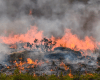
Stanford research reveals the rapidly growing influence of wildfire smoke on air quality trends across much of North America. Wildfire smoke in recent years has slowed or reversed progress toward cleaner air. Tens of millions of people suffer degraded health, thousands die…
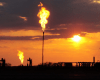
2023 is the worst ever year for areas burned by wildfires in British Columbia, Alberta and the entire nation of Canada. For years before 2023, despite huge sums invested by the public to improve firefighting responses, areas burned were trending upward. So what is the response by Canada’s federal and western provincial governments to the warnings of climate scientists? They are spending tens of billions of dollars to increase production of fossil fuels.

A 2022 study1 by investigators from Yale and George Mason universities reported survey results after Americans were questioned about climate change. I suspect ignorance would be lower and expressions of concern would be higher in Canada since this country is not bombarded with reckless disinformation to the extent experienced by our neighbours…

If we paid more attention to impacts of climate change, we would demand our governments take immediate and effective action, not offer promises that solutions will somehow be in place by 2050. Warning signs are plentiful in 2023. NASA reports that current warming is happening at a rate not seen in the past 10,000 years. The scientific agency says evidence of rapid climate change is compelling…
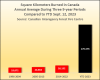
Wildfires are clearly a major problem for Canadians in 2023. Primary causes are known but solutions conflict with policies of governments. Canadian politicians prefer to promote fossil fuel production and eliminate forest diversity without regard for long-term costs to the planet. Failure to change forest management practices and moderate greenhouse gas emissions will result in greater fire disasters in the future.

Mike Hanafin, “Brilliant doesn’t do this justice. @thejuicemedia usually skewers Australian (Australien!) govts/politicians for kissing up to Big Oil, Fossil Fuel extractors, & monopolist billionaires. But they noticed it was happening here too. Great cameos from Galen Weston, Jimmy Pattison, and John Horgan.

A key element of Canada’s future climate policy is carbon capture, utilization, and storage (CCUS). The federal government is spending hundreds of millions of dollars to advance the commercial viability of CCUS technologies. Despite what critics say about CCUS, it is working as intended for fossil fuel producers. CCUS is not a solution, it is a distraction. The aim is to justify ‘continued production of carbon rich energy.

Eliminating methane emissions offers huge potential for quick, affordable climate action. Modern technology makes identification of leakage relatively simple, but industry and governments are dedicated to increased fossil fuel production. As a result, methane leakage is consciously underreported and methane abatement actions are not taken.
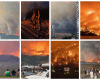
Premier David Eby and Ministers of British Columbia spent much time in August 18 news conferences. They talked about dealing with wildfires and assisting the tens of thousands of people affected by the province’s hottest ever time for burning. Politicians spent little time talking about factors that contributed to the current State of Emergency…

The UK’s Royal Meteorological Society wrote about the deadly heatwave that affected western North America in 2021. An underlying message was to prepare for more disasters like the destruction of Lytton, BC. This might happen even if governments get truly serious about climate change, an unlikely scenario even as death and destruction mounts.

Substance use disorder (SUD) affects human’ brains and behaviors, leading to uncontrolled use of substances. Symptoms can be moderate to severe. For individuals, this might involve drugs or alcohol. For industrialized societies, it certainly involves fossil fuels.

University of Manchester’s Dr. Kevin Anderson is a visiting researcher in the Department of Earth Sciences at Sweden’s Uppsala University. Anderson warns that continuing on our current path will result in a catastrophic outcome due to climate change. He cautions against believing the political rhetoric about progress and says the concept of NET-ZERO really means NOT-ZERO. He believes the commonly used expression is cover for an unacceptable plan to kick the can down the road.

New York Times science writer David Wallace-Wells, author of The Uninhabitable Earth, issues a weekly newsletter for subscribers. The August 2 edition is a powerful and disturbing look at the future.

— Climate change denial is based on prioritizing consumerism and wealth accumulation over human health and survival.
— Climate change indifference is based on false hope, inattention, or ignorance.
— Climate change concern is based on altruism and science.


Trump declares USA is “stupid”. https://www.independent.co.uk/news/world/americas/us-politics/supreme-court-trump-birthright-citizenship-case-b2949973.html https://www.independent.co.uk/bulletin/news/trump-supreme-court-birthright-citizenship-debate-stupid-b2950293.html?utm_source=taboola&utm_medium=related&utm_campaign=embed1 President Donald Trump has branded the U.S. “stupid” after attending Supreme Court arguments over his administration's efforts…
Justice? More posts from Liz Oyer https://www.youtube.com/shorts/l3R3QUI1J-M?feature=share LIZ why Oyer was fired. https://www.youtube.com/shorts/xs9N_2W_6CU?feature=share LIZ explains the DOJ’s abnormaIity https://www.youtube.com/shorts/9tDcGMVW0HU?feature=share LIZ…
Who benefits most from Trump's DOJ? Trump’s Justice Department Dropped 23,000 Criminal Investigations in Shift to Immigration In the first…
There are examples worldwide of methods to produce electricity that provide us with solutions; some are tried and true and…
 in-sights.ca
There are examples worldwide of methods to produce electricity that provide us with solutions; some are tried and true and…