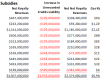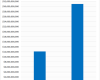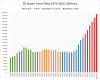

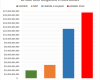
BC Liberals delivered $9 billion to IPPs

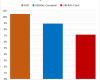
In the last five years, the delivery of cash to IPPs totaled $4.6 billion. If the established trend continues, the amount will be $8.3 billion in the next five years. Amounts flowing to IPPs and the necessary write-off of more than $6 billion in deferred costs means in the next five years, consumers will pay rates 60% higher than they’ve paid in the last five years. In addition, more than $10 billion dollars is committed to Site C and BC Hydro has been spending over $2 billion a year on capital expenditures. Without profitable new markets – none are anticipated – the 60% price rise for electricity could be 100% in the foreseeable future.

Critics of private power projects not silent

Devastation of many private power installations in BC wilderness involves:
blasting and tunnelling, clearcuts for the penstocks, clearcuts for the power lines to join clusters of powerhouses together, service roads larger than for logging, clusters of permanent powerhouses, diversion of waterfalls, drying of rivers…

Duped by fossil fuel barons

The following excerpts are from a piece in DeSmog Blog. It is written by Martyn Brown, an articulate commentator on public affairs and, years ago, Premier Gordon Campbell’s Chief of Staff. The linked piece is the fourth of four parts about B.C.’s climate action plan. The entire series is worth the time of anyone seeking a more complete understanding of the intended and unintended directions of BC’s current energy policies. It is excellent work.

How did we get into this IPP mess?

Politicians assumed that power demand would grow and prices rise so they readily agreed to BC Hydro purchase contracts that were decades long with annual price escalation tied to inflation. They carelessly assumed the arrangements would be beneficial to all. However, what private industry achieved was guaranteed sales with guaranteed profits. All of the financial risks were carried by the public.

BC Hydro gifts worth billions

Had IPP’s sold their power for the same price that BC Hydro realized in trade markets, they would have realized:

In FY 2015, $591 million less;
In FY 2016, $782 million less.
The deals will get better for IPPs. BC Hydro’s website now announces that it has contracted for 19,290 GWh from these private producers. That is 35% more than purchases in the just completed fiscal year and follows an established trend.

Port Mann losses “unsustainable”

Since toll revenue at Port Mann has covered only 39% of operating costs, the BC Government needs to explain how it will finance existing and future shortfalls on Port Mann/Highway 1. These are growing by about $5 million a month and paying for an even more costly tunnel replacement will demand a solution. One possibility was proposed in the original Gateway Program. It contemplated: “…tolling of all bridges connecting to the Burrard Peninsula, including the Lions Gate, Ironworkers Memorial, Pitt River, Port Mann, Pattullo, Alex Fraser, Knight Street, Oak Street and Arthur Laing bridges…”

Time to end complicity with swindlers

If members of the BC Legislature value ethical standards in business, they must revoke the LNG Project Agreements Act, the enabling act passed for Malaysian National Oil Company Inc.(PETRONAS). That company’s senior management answers directly to Malaysian Prime Minister Najib Razak, who is implicated by the FBI in misappropriations of more than $3 billion.

News or not news?

Natural gas production levels have increased (53% since 2007) yet net revenue to government from gas in the past year was negative. Instead of being paid for the right to extract this public resource, British Columbians are paying for its removal.

If facts awkward, invent new ones

Spin doctors understand that statements should be given with certainty in places where they won’t be tested for accuracy. The corporate press is one of those places. In words of Jonathan Swift: “Falsehood flies, and truth comes limping after it, so that when men come to be undeceived, it is too late; the jest is over, and the tale hath had its effect.” However, I’m always willing to test the words of a person who intends to mislead.

LNG boom gone bust

Christy Clark and her crew spent more than a billion dollars through the Ministry of Natural Gas Development, gave away billions more in gas industry subsidies and promised low or no taxes, taxpayer-paid infrastructure and subsidized electricity; all in the hope of creating an LNG industry that had a competitive disadvantage from the start. Critics like the one you’re reading knew LNG wealth promises were hollow but this Government decided to continue wasting vast sums to avoid admitting failures from incompetence and poor judgement. They will claim bad luck and unforeseeable circumstances; knowledgeable people will know differently.

One class of criminal benefits another

A perfect storm in Toronto and Vancouver housing markets, “a mixture of rising home prices, foreign money laundering, and an unregulated sub-prime lending system most Canadians don’t even know exists.”
When fortunate people cannot afford a low rung on the property ladder, the situation must change. Christy Clark and Rich Coleman may regularly shake hands with the province’s most wealthy residents but, the ground upon which they stand has grown dangerously unstable.

Premier Clark’s costly friend

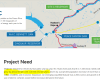
The BC Liberal government pushed hard for a controversial expansion of the power grid into the northern wilderness, at a cost of more than $800 million. The Northwest Transmission Line was built to enable resource developments but Imperial Metals’ Red Chris and an AltaGas hydro project are the only major players on the power line grid. Red Chris would not be feasible without the extension of the power line and the $886-million expenditure “appears increasingly as a public subsidy for a single mine.”

A slow-motion financial disaster

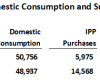
Comparing CY 2007 to CY 2015, domestic power consumption declined 4%. But, the amount paid IPPs increased $762 million or 167%. According to BC Hydro, the per gigawatt hour price paid IPPs in the quarter ended December 2015 was $91,422. In the same period, the average MidC wholesale price was $44,212 Canadian, well under half the amount paid IPPs in British Columbia.

Linda Larson, Have You No Sense of Decency?

Liberal MLA Linda Larson’s comments were absolutely inappropriate, ill-informed and, quite frankly, incredibly ignorant. Just as the world still remembers other human-rights atrocities, like the Holocaust, to honour victims and learn from the past, the lasting effects of residential schools on First Nations people must also not be forgotten.

🎶Takin’ Care of Business🎶

We have July 13 results of the monthly Crown Petroleum and Natural Gas Rights Public Rights Tender. Revenues were $510,661 so proceeds for the calendar year-to-date are less than $5 million. In the year before Christy Clark became Premier, the same seven months brought in $735 million. In 64 months of her Premiership, Christy Clark’s government brought in $1 billion from gas and petroleum rights sales. In the last 64 months of his leadership, Gordon Campbell brought in $7 billion. If we rank revenues in the first seven months of 2014, 2015 and 2016 against the last 20 years, they rank 18th, 19th and 20th…

Did you hear the one about…

According to Ms. Clark, LNG producers have already spent $20 billion without having made a decision to build and having no buyers for the gas – $20 billion can buy a lot of lunches.

If this was real money imagine what could be done investing in green technology – creating meaningful, well-paid jobs, and having clean air.

Actions inconsistent with innocence

During its years in power, BC Liberals remade British Columbia. While the provincial economy grew, the fortunes of ordinary people declined, for the first extended period ever. Beneficiaries of change had demanded redistribution of wealth to the disadvantage of all but a few. The end result was not incidental or accidental.