
“Bullshit is everywhere”

For eight years now, I’ve been posting words on the Internet. I was influenced in the beginning by my first two grandsons, now pushing 11 years of age. I looked at these youngsters, and the ones that followed, and concluded that I owed a duty to agitate for a better world. I want all children to have best possible opportunities for education and opportunity, to live in a society that is fair and respectful to people and values the environmental riches of our land.

I’m happy to have been involved in this commitment but I hope the May election will be a turning point. It will be a time to decide whether or not the powerful self-interests of privileged people are insurmountable.

Assets up, production down

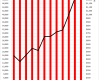
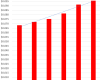
In the real world, if a company grew its assets by $18 billion (138%) but reduced its production by 8%, heads would roll. In Premier Clark’s La La Land, party favours roll instead. Good Liberal CEO Jessica McDonald is secure in her job, at least until until May 9.

Liespotting

BC Hydro will lose hundreds of million of dollars per year on Site C dam output, according to a Vancouver Sun article by economist Marvin Shaffer. Facing an installation cost double that of power from utility-scale solar or gas fired turbines, additional hydro-electricity is unneeded and unaffordable. However, in the face of an election, the board of BC Hydro, loaded with Liberal patronage appointees, is not about to correct its faulty course.

Pull down the veil of lies

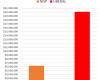
BC Liberals released the 2017 Budget and Fiscal Plan. The government elected by promising a “DEBT-FREE BC” forecasts total provincial debt will grow $11 billion to a total of $78 billion in next three years. Under Christy Clark as Premier, provincial debt will have increased $33 billion, which was the total debt accumulated in the 130 years after British Columbia became Canada’s sixth province. That $78 billion does not include the debt portion of contractual obligations, which total $100 billion but are not mentioned anywhere in 149 pages of the Budget and Fiscal Plan. The PR strategy is to never admit these exist or have impact. This is egregious dishonesty.

Borrow-and-spend politics

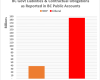
The 10-year increase, 2006-2016, in contractual obligations was $67 billion, while the regular provincial debt rose by $31 billion. That’s almost $10 billion a year increase in financial commitments by a government that claims they are creating “debt-free BC.”

The Boren effect

If the liabilities owing producers were recorded routinely, provincial natural gas revenue would be less than zero in two of the last four years. In current dollars, BC’s gas income, including rights sales, declined by more than $2.5 billion, comparing 2016 to 2001. Of course, the volume of production was much higher in 2016.

Mumbling and fuzzifying

It cannot be taken for granted that PPPs are more efficient than public investment and government supply of services. One particular concern is that PPPs can be used mainly to bypass spending controls, and to move public investment off budget and debt off the government balance sheet, while the government still bears most of the risk involved and faces potentially large fiscal costs.

Breaking news broken

Government forecasts that four year natural gas royalties total, 2017 through 2020, may be $926 million but that doesn’t deduct any growth in production tax credits that industry is accruing but government is not recording. In the past four years, the liability to producers increased by $1,158 million. If the liability for unrecorded credits – amounts that can be deducted from future royalties – continues to grow at the rate of the past four years, BC will receive no net gas royalties, provided that a more honest government begins to record the liability. There is already $2+ billion owed to producers.

Have they lied to you before?

George Orwell: Political language …is designed to make lies sound truthful and murder respectable, and to give an appearance of solidity to pure wind. Although BC’s debt and obligations increased $99 billion in ten years, Liberals claim the province is “on track to be free of any operating debt by 2021.”

Other lies

BC Hydro’s management are using deferral accounts and accounting trickery to conceal the company’s financial conditions and prospects and they are telling outright mistruths about demand for electricity by consumers in British Columbia.

Why this, why now?

Are there secret reasons why Liberals committed billions of dollars for Site C to produce power that BC consumers won’t need, even in the distant future? Have we had hints of why there is a rush toward what Premier Clark called the point of no return and what others called a route to nowhere? Do those reasons have anything to do with the rewarding habits of prime Site C contractors?

Designed to mislead

The British Columbia Liberal 2001 election platform had 37 references promising improved democracy, increased accountability or more open government. Its 2013 platform had none, because the party had lost interest in the goals, not because they had been attained. If ever any party strayed far from principles that first got it elected government, it is the one led today by Christy Clark. If you doubt my assertion, read through A New Era for British Columbia. That document was prepared by Gordon Campbell and his associates. Some will believe that it was a pack of lies from the start. Others would argue — excepting the page 9 promise to “not sell or privatize BC Rail” — that the Liberal Party started with good intentions and lost its way, corrupted by wealth and power…

Induced failure

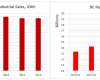
The set of facts that troubles BC Hydro executives most is the one that best reveals their deceptions. The consumption of electricity in this province has remained stable for a dozen years. In fact, the first half of the current fiscal year shows consumption is down by 2.1%, compared to the preceding year. Under its current Liberal direction, BC Hydro’s leadership forgets the company’s original purpose. Now, the aim is to deliver benefits to a tiny group of individuals and corporations and to have ordinary citizens pay the cost, whether it is affordable or not.