

The recent revelations about the supposed “decision process” regarding continuing with Site C, as detailed by Sarah Cox, are totally unacceptable. The public now knows that there never was any intention… to Stop Site C.
Some may be able to moderate use of electricity from the provincial grid but almost no individual can stop being a BC Hydro consumer. That fact obliges politicians to ensure the company is operated with maximum efficiency for the benefit of every citizen, not the relative handfull that are rewarded by BC Hydro’s misconceived spending plans. Sadly, the Horgan Government does not agree. Utility policies and company management are almost unchanged during the last 11 months and the recently announced review is specious.
Delegates from 195 countries met in Paris for the 2015 United Nations Climate Change Conference. Prime Minister Justin Trudeau had a plan to address climate change and “take on a new leadership role internationally.”
Canada, British Columbia, Alberta and Saskatchewan are today committed to pumping billions of dollars into the inevitable carbon bubble. Delaying transition to renewables to extract additional wealth from fossil fuels is dangerous Smarter people than Notley and Trudeau prefer a different approach.
Many citizens — although not In-Sights readers — will be shocked to learn that credits owed natural gas producers soared by more than $1 billion from April to November 2018. That increase is two and a half times more than the total gas royalties received by government in the three fiscal years ended March 2018. The $3.2 billion balance owed to producers ensures that royalty revenues will remain at paltry levels throughout the Horgan Government’s present term.
The Havyard shipyard announced that it received a contract to build seven battery-powered ferries for Fjord1, Norwegian transport conglomerate. The news comes after the operators of the first all-electric ferry in Norway, the ‘Ampere’, reported some impressive statistics after operating the ship for over 2 years. They claim that the all-electric ferry cuts emissions by 95% and costs by 80%. Unsurprisingly, the potential cost savings are attracting a lot of orders for new electric ferries and for the conversion of existing diesel-powered ferries…
Committing billions of taxpayers’ dollars to ensure the public carries all economic risks of the Trans Mountain project is not only financially unsound, it requires a commitment to climate change denial similar to that of Trump’s EPA assassin Scott Pruitt. The positions of Canada and Alberta show absolute ignorance of today’s economic world…
In British Columbia, ethical rules of news gathering are not always followed. Some offences are minor, others are significant…
Simple financial analysis demonstrates that management of BC Hydro during recent years was thoroughly incompetent. Largely, that is explained by policies and people imposed by BC Liberals on a utility that had served the public proficiently for more than four decades…
Under BC Liberals, BC Hydro stopped using regulatory accounts for rate smoothing and used them instead to hide the true state of the utility’s financial condition.
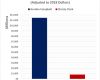
In the fiscal years 2016 and 2017, natural gas royalty payments totalled $291 million. However, credits owed producers increased $748 million so, if the province bothered to record these obligations as was recommended by the Office of the Auditor General, the royalty account had a two-year deficit of $457 million. A decade ago, two fiscal years — 2006 and 2007 — produced gas royalty payments of $3.7 billion (2017 dollars) from substantially less production.
If we had experienced more truthfulness from BC Hydro, the province would not be spending billions on Site C. Not only is the project an option more expensive than alternatives, domestic demand does not support the addition of any new sources of power beyond those involving upgrades of existing generating facilities.
The decision to proceed with Site C was not based on need for power by BC consumers. Demand is this province has been more or less unchanged since 2005… While the NDP has done much to change the direction of government in BC, they’ve been paralyzed when it comes energy policies. BC Hydro has been a troubled organization for years and it will not be rescued by timid actions. That’s bad news for every BC business and ever resident who consumes electricity.
There is a small group of people — BC Liberals and friends — who viewed BC Hydro as a giant faucet for disbursement of cash. It is a costly reality for consumers of electricity in British Columbia…
Removing the impact of gas tax and GST, our American neighbours pay as much as 38¢ a litre less. That amounts to $23 for a 60 litre fill-up. Based on average consumption, we suffer about $1,000 a year in excess charges for each vehicle. It appears that industry collusion and lack of competition are main factors.
Slowing of growth in carbon emissions falls well short of the sharp drop in carbon emissions thought necessary to achieve Paris climate goals. We need a far more decisive break from the past…
Dave Melrose, a reader who is in the solar installation business, commented on my previous article Death knell for net metering. He worries that people could be misinformed because I didn’t make clear that self-generation of electricity remains viable for homeowners. People tell me a 15-year payback on solar installations is common, even without selling excess power to the utility. However, having studied the financial statements of BC Hydro, I know that huge rate increases are coming. These will shorten the solar system payback considerably…
The coming shifts in power distribution is referred to as the democratization of energy. It is resisted at BC Hydro and other utilities but it is inevitable. Failure to adapt will cost us billions…
Residents of British Columbia understand financial pain that follows when officeholders subvert public utilities to gain political advantage and reward special interests. BC Liberals aimed to privatize public assets and services. When it could not be achieved overtly, it was done by stealth. After inevitable failures and disasters, legislators concealed them by employing a broad misinformation strategy. BC’s success in duping the public on utility matters encouraged Ontario Liberals to adopt accounting fakery in their own province…
BC Hydro fears the amount of power fed to the grid by participants in net metering will expand substantially. As a result, this week the utility announced they intend to change the program so that it is not available to customers generating power beyond their own energy needs…
Is Reality finally having an adverse impact on The White House? https://www.rawstory.com/leavitt-miller-pretti/ "White House Press Secretary Karoline Leavitt refused to defend…